Wall Tile from a Royal Funerary Structure
ca. 2675–2625 B.C.E.
Object Label
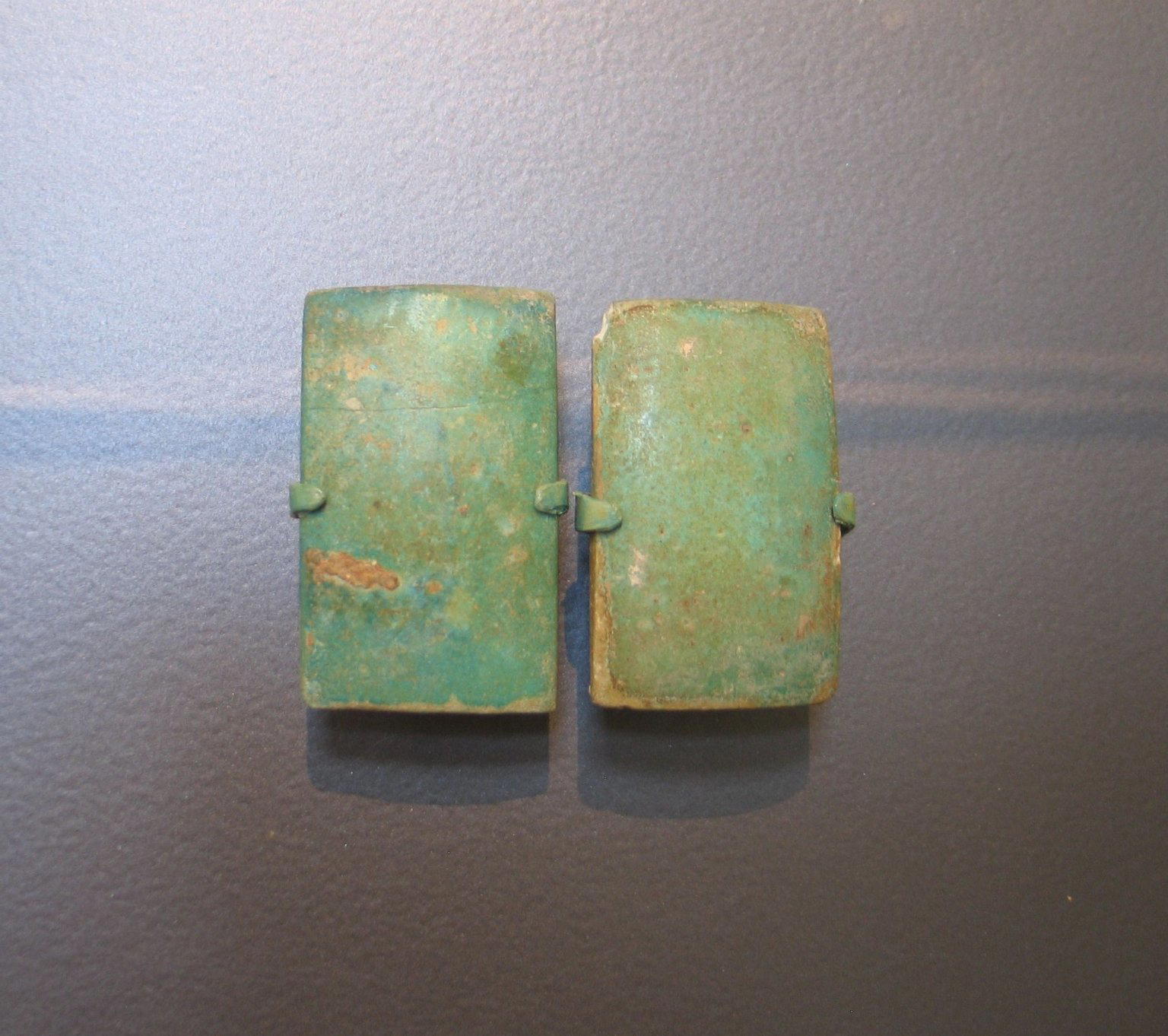
Blue-green glazed rectangular tiles like these once decorated the walls of subterranean rooms beneath King Djoser’s Step Pyramid. As the first example of monumental stone architecture in Egypt, Djoser’s funerary complex was meant to provide the king’s spirit with an abode for eternity. The tiles imitated the hangings of reeds lashed together by horizontal cords that decorated palace walls during this king’s lifetime.
Caption
Wall Tile from a Royal Funerary Structure, ca. 2675–2625 B.C.E.. Faience, 2 3/16 x 1 7/16 x 11/16 in. (5.6 x 3.6 x 1.8 cm). Brooklyn Museum, Charles Edwin Wilbour Fund, 73.84.4.
Gallery
Not on view
Gallery
Not on view
Title
Wall Tile from a Royal Funerary Structure
Date
ca. 2675–2625 B.C.E.
Dynasty
Dynasty 3
Period
Early Old Kingdom
Geography
Place made: Saqqara, Egypt
Medium
Faience
Classification
Dimensions
2 3/16 x 1 7/16 x 11/16 in. (5.6 x 3.6 x 1.8 cm)
Credit Line
Charles Edwin Wilbour Fund
Accession Number
73.84.4
Have information?
Have information about an artwork? Contact us at