The God Osiris
664–525 B.C.E.


1 of 3
Object Label
Figures of the god Osiris are particularly common from the Late Period (circa 664–332 B.C.). The craftsmanship of this figure is of a very high standard, the head executed virtually without fault. The bland and benign expression of the face is characteristic of work after the beginning of Dynasty XXVI. That the false beard is attached under the chin and does not envelop it suggests a dating in the second half of the dynasty.
Caption
The God Osiris, 664–525 B.C.E.. Greywacke (sandstone), 8 × 5 × 2 in., 4 lb. (20.3 × 12.7 × 5.1 cm, 1.81kg). Brooklyn Museum, Charles Edwin Wilbour Fund, 48.163.
Gallery
Not on view
Gallery
Not on view
Frequent Art Questions
This piece is identified as Osiris. Do you know what physical characteristics on this head would allow an Egyptologist to end up with this conclusion?
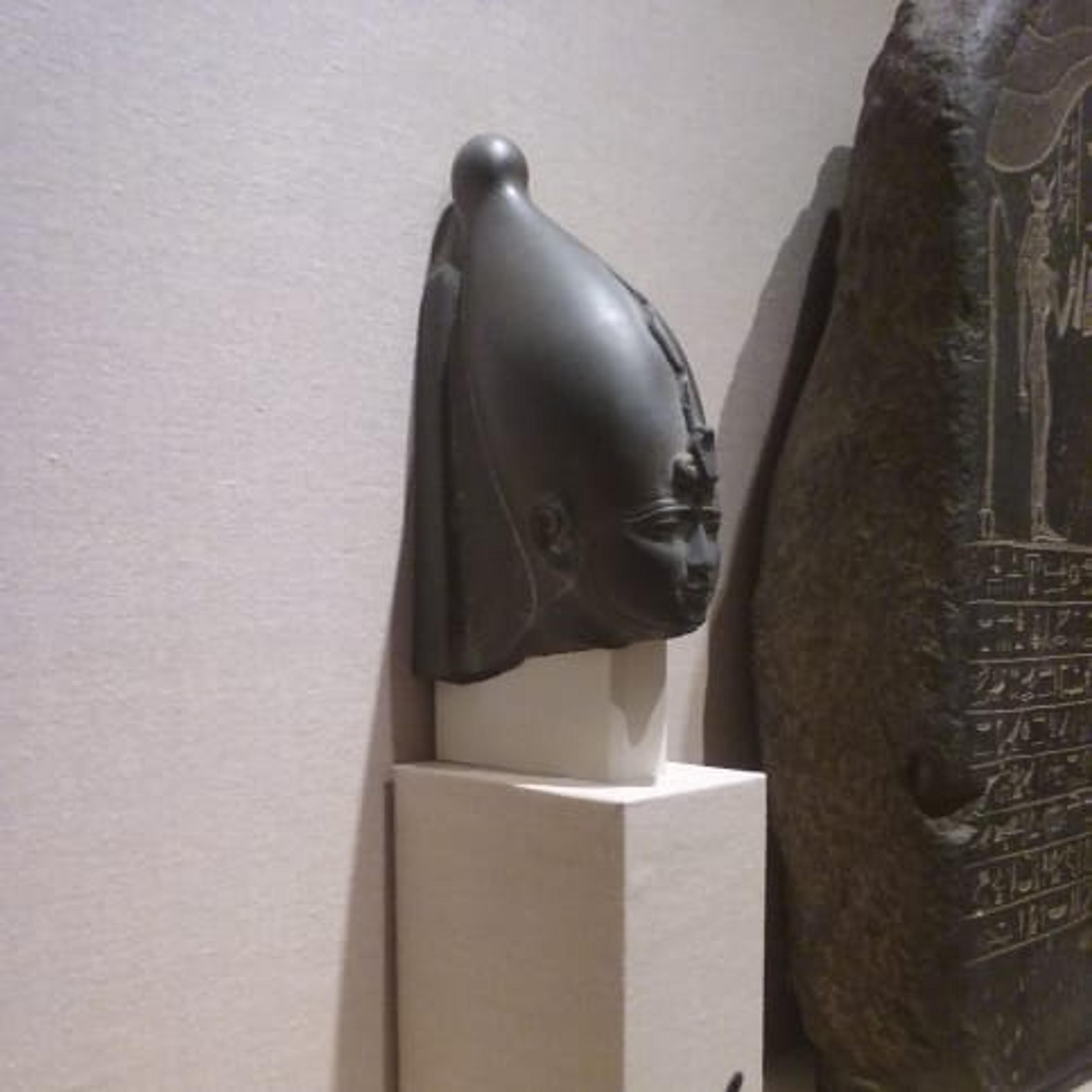 Osiris has a pretty standard appearance, he usually wears some version of the White Crown of Upper Egypt. The unique feature here is in the uraeus, which is the snake that appears on the crown--his is a pretty long snake versus the more standard shorter one. Are you familiar with the uraeus?Yes, I am. But this is the first time that I see a uraeus like the one on the head of Osiris. Does his uraeus always have that long snake? Is there any one else who tends to wear a crown with a similar uraeus?I believe Osiris' uraeus is always on the longer end of the spectrum. Royalty almost always wore a uraeus, either on their crowns or in their hair. Other versions of the uraeus are shown either coiled at the forehead or with the body wrapped around the head rather than outstretched.
Have information?
Have information about an artwork? Contact us at