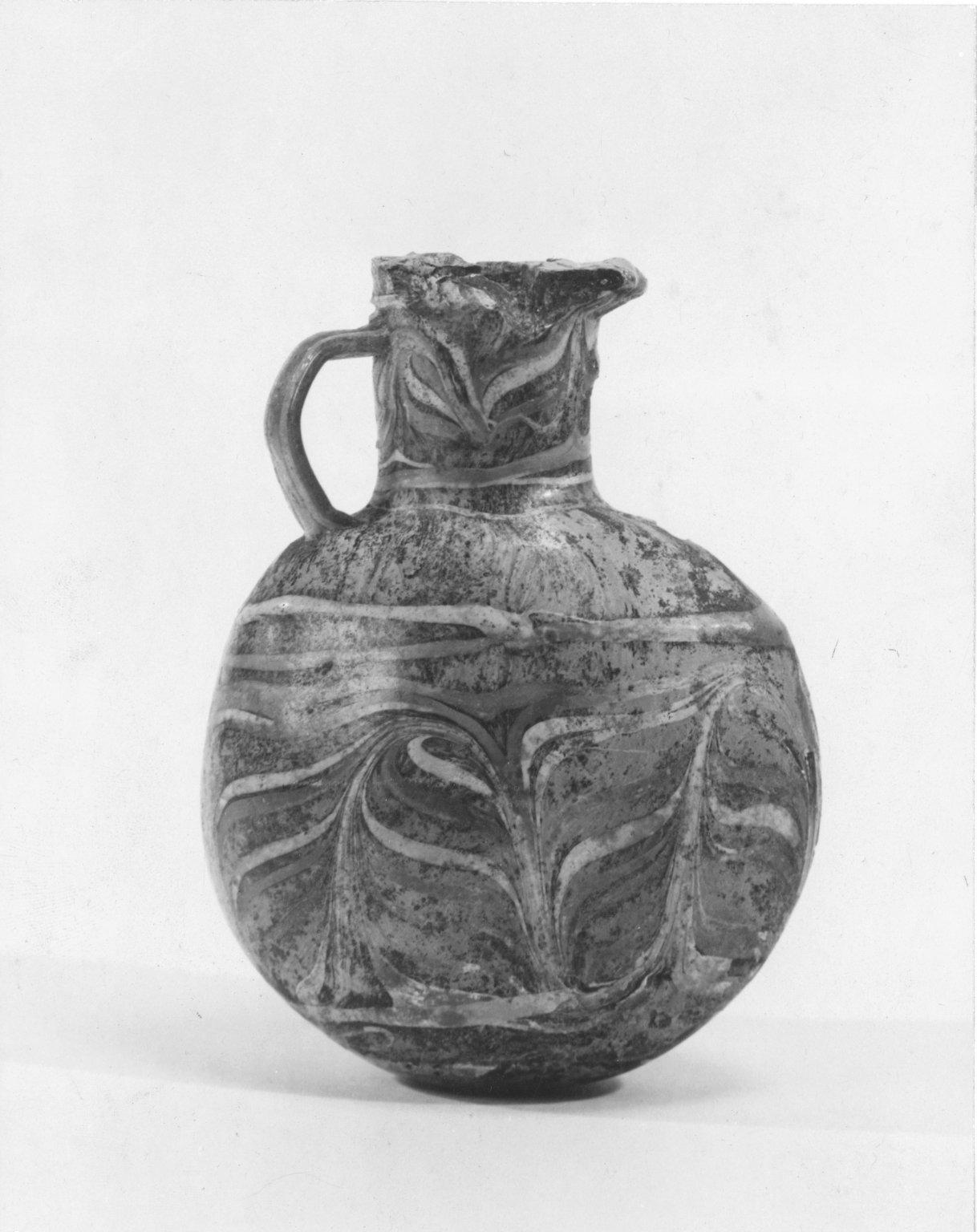
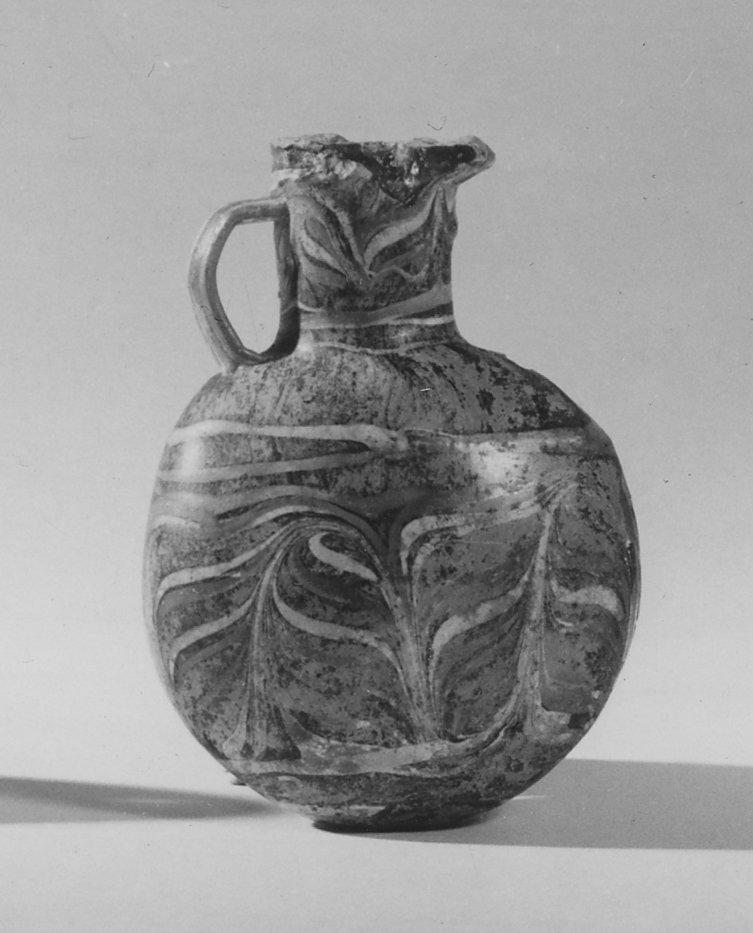
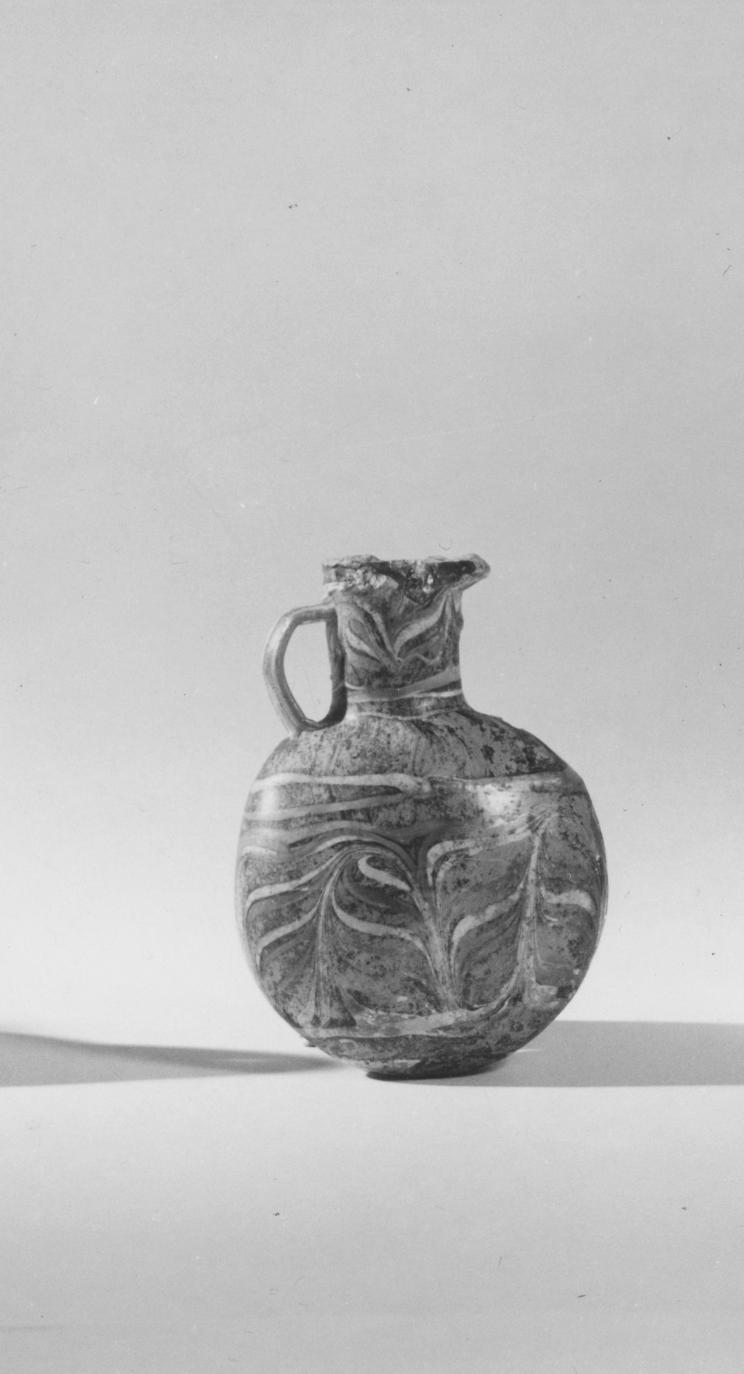
Polychrome Core-Formed Vase with Festooned Design
ca. 1332–1213 B.C.E.
1 of 3
Object Label
Vessels
Ancient Egyptian artists produced vessels in both glass and faience, producing different effects with each material.
The Egyptians began manufacturing glass vessels during the Eighteenth Dynasty reign of Thutmose III (circa 1479–1425 B.C.E.). Early examples, valued for their rarity and beauty, were luxury items used to store precious oils and perfumes. Craftsmen produced striking effects by adding threads of colored glass to a vessel’s surface while it was still hot and then dragging a pointed object across the surface to produce festooned patterns. The artist who made the fish flask shown here indicated the animal’s scales by pressing blue powdered glass down into the interior.
Early scholars often incorrectly characterized faience as simply an inexpensive substitute for glass, but recent research suggests that the Egyptians favored the material because of its attractive color and its association with water, the source of creation. A characteristic type of Eighteenth Dynasty faience vessel is the shallow bowl. Early in the dynasty, artists painted the interiors of these bowls with marsh scenes including fish and water plants; later painters introduced human figures.
Ancient Egyptian artists produced vessels in both glass and faience, producing different effects with each material.
The Egyptians began manufacturing glass vessels during the Eighteenth Dynasty reign of Thutmose III (circa 1479–1425 B.C.E.). Early examples, valued for their rarity and beauty, were luxury items used to store precious oils and perfumes. Craftsmen produced striking effects by adding threads of colored glass to a vessel’s surface while it was still hot and then dragging a pointed object across the surface to produce festooned patterns. The artist who made the fish flask shown here indicated the animal’s scales by pressing blue powdered glass down into the interior.
Early scholars often incorrectly characterized faience as simply an inexpensive substitute for glass, but recent research suggests that the Egyptians favored the material because of its attractive color and its association with water, the source of creation. A characteristic type of Eighteenth Dynasty faience vessel is the shallow bowl. Early in the dynasty, artists painted the interiors of these bowls with marsh scenes including fish and water plants; later painters introduced human figures.
Caption
Polychrome Core-Formed Vase with Festooned Design, ca. 1332–1213 B.C.E.. Glass, 3 5/16 x diam. 2 5/16 in. (8.4 x 5.8 cm. Brooklyn Museum, Charles Edwin Wilbour Fund, 33.683. (Photo: Brooklyn Museum)
Title
Polychrome Core-Formed Vase with Festooned Design
Date
ca. 1332–1213 B.C.E.
Dynasty
Dynasty 18 to early Dynasty 19
Period
New Kingdom
Medium
Glass
Classification
Dimensions
3 5/16 x diam. 2 5/16 in. (8.4 x 5.8 cm
Credit Line
Charles Edwin Wilbour Fund
Accession Number
33.683
Frequent Art Questions
This vase from the 18th dynasty doesn't seem to have a bottom to stand on. Was it used just for decoration?
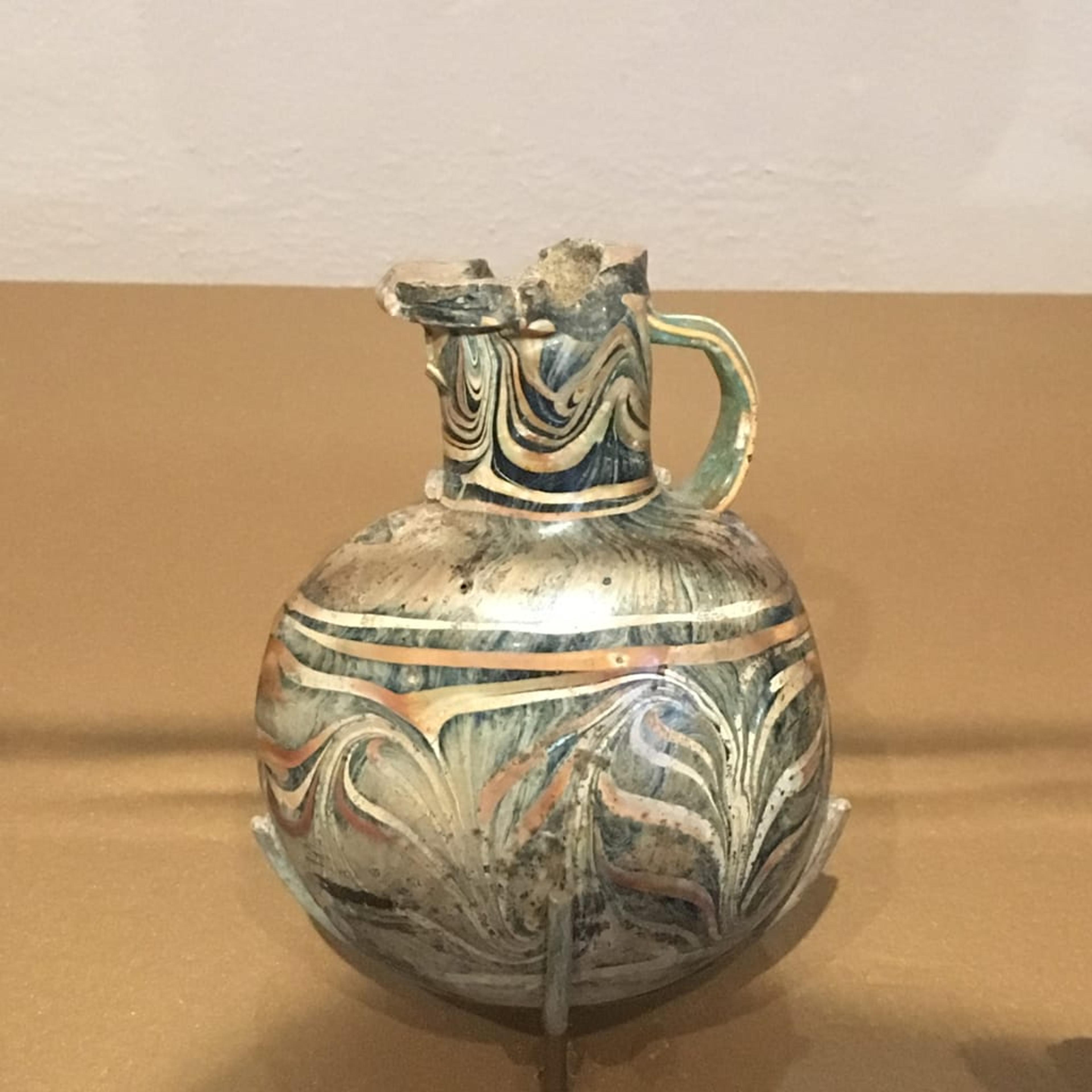 Generally when a vase doesn't have a base like this, as you will see throughout the Egyptian galleries, it was made to stand up in sand or earth, with the lower portion partially buried.Based on it's shape and size, and the fact that it is glass, this could also likely be a flask, meaning it would be carried rather than set down.Tiny flask vessels could be used to carry any number of things, including perfumes and unguents.
Have information?
Have information about an artwork? Contact us at