Crocodile Mummy
1st century


1 of 3
Object Label
The Egyptians offered crocodile mummies to the god Sobek to request his help with life’s daily problems. Juvenile crocodiles were used in this practice because the full-grown adults were so dangerous.
The ancient Greek historian Herodotus devoted two chapters of his history of Egypt to crocodile worship. For the Greeks, this was an especially exotic element of Egyptian religion.
The ancient Greek historian Herodotus devoted two chapters of his history of Egypt to crocodile worship. For the Greeks, this was an especially exotic element of Egyptian religion.
Caption
Crocodile Mummy, 1st century. Animal remains (Nile crocodile, Crocodylus niloticus), linen, white tape, 2 x 4 3/8 x 29 1/2 in. (5.1 x 11.1 x 74.9 cm). Brooklyn Museum, Museum Collection Fund, 14.668. (Photo: Brooklyn Museum)
Gallery
Not on view
Gallery
Not on view
Title
Crocodile Mummy
Date
1st century
Period
Roman Period
Medium
Animal remains (Nile crocodile, Crocodylus niloticus), linen, white tape
Classification
Dimensions
2 x 4 3/8 x 29 1/2 in. (5.1 x 11.1 x 74.9 cm)
Credit Line
Museum Collection Fund
Accession Number
14.668
Frequent Art Questions
Who did the crocodile get offered to?
The god Sobek, who was associated with military power, and fertility. Most animals who live in the Nile are associated with fertility, because the river is the source of all life in Egypt.What is this?
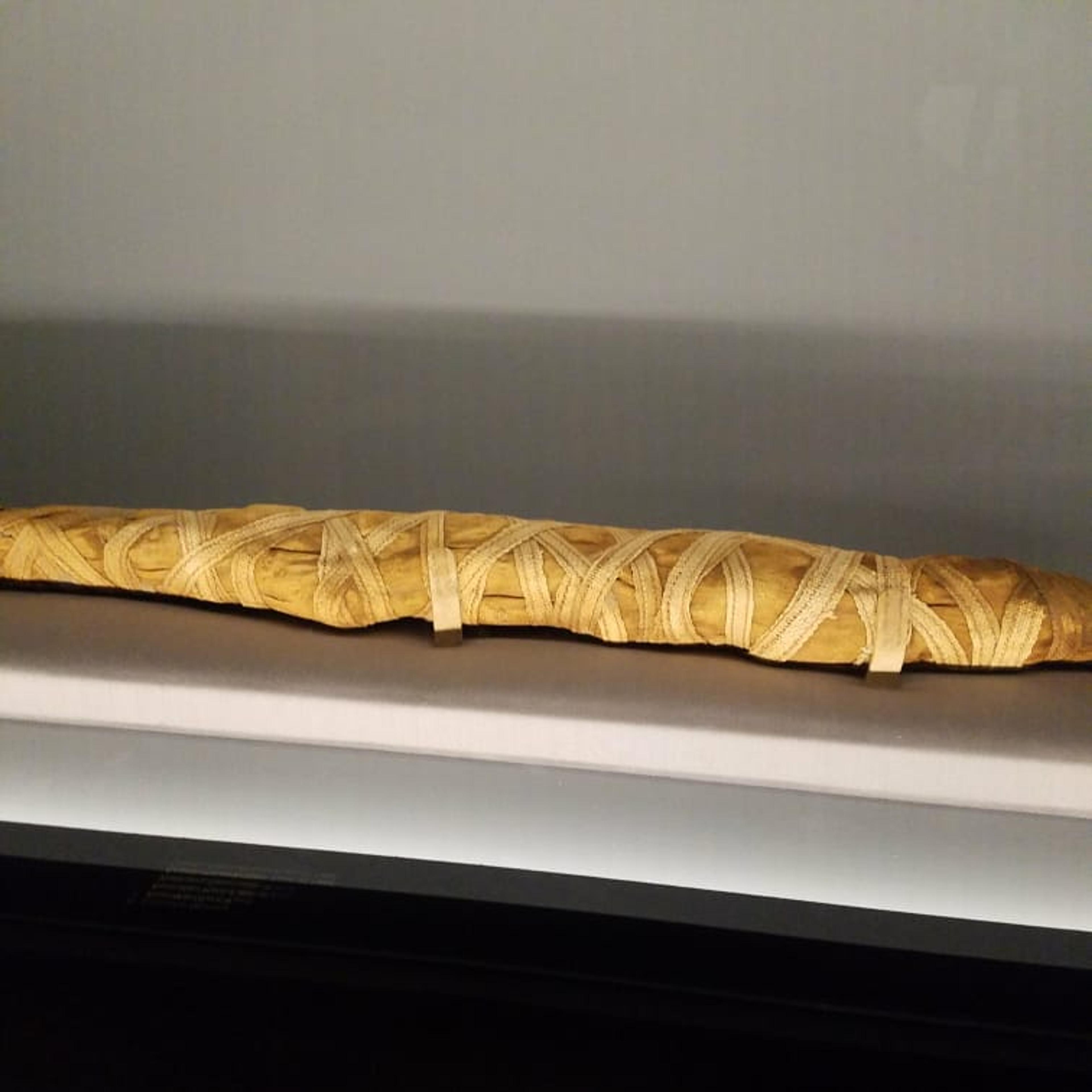 That is a crocodile mummy! People thought that the crocodile soul could bring messages to the god Sobek, a crocodile god associated with the Nile River.
Have information?
Have information about an artwork? Contact us at