Bandolier Bag
Anishinaabe (Ojibwe), Gawababiganikak


1 of 16
Caption
Anishinaabe (Ojibwe), Gawababiganikak. Bandolier Bag, late 19th–early 20th century. Glass beads, cloth, silk, wool, 35 × 14 1/4 in. (88.9 × 36.2 cm) mount (m1- including board and bonnet): 42 × 21 × 6 1/2 in. (106.7 × 53.3 × 16.5 cm). Brooklyn Museum, Museum Collection Fund, 30.1471. (Photo: Brooklyn Museum)
Gallery
Not on view
Collection
Gallery
Not on view
Collection
Title
Bandolier Bag
Date
late 19th–early 20th century
Medium
Glass beads, cloth, silk, wool
Classification
Dimensions
35 × 14 1/4 in. (88.9 × 36.2 cm) mount (m1- including board and bonnet): 42 × 21 × 6 1/2 in. (106.7 × 53.3 × 16.5 cm)
Credit Line
Museum Collection Fund
Accession Number
30.1471
Frequent Art Questions
Tell me more.
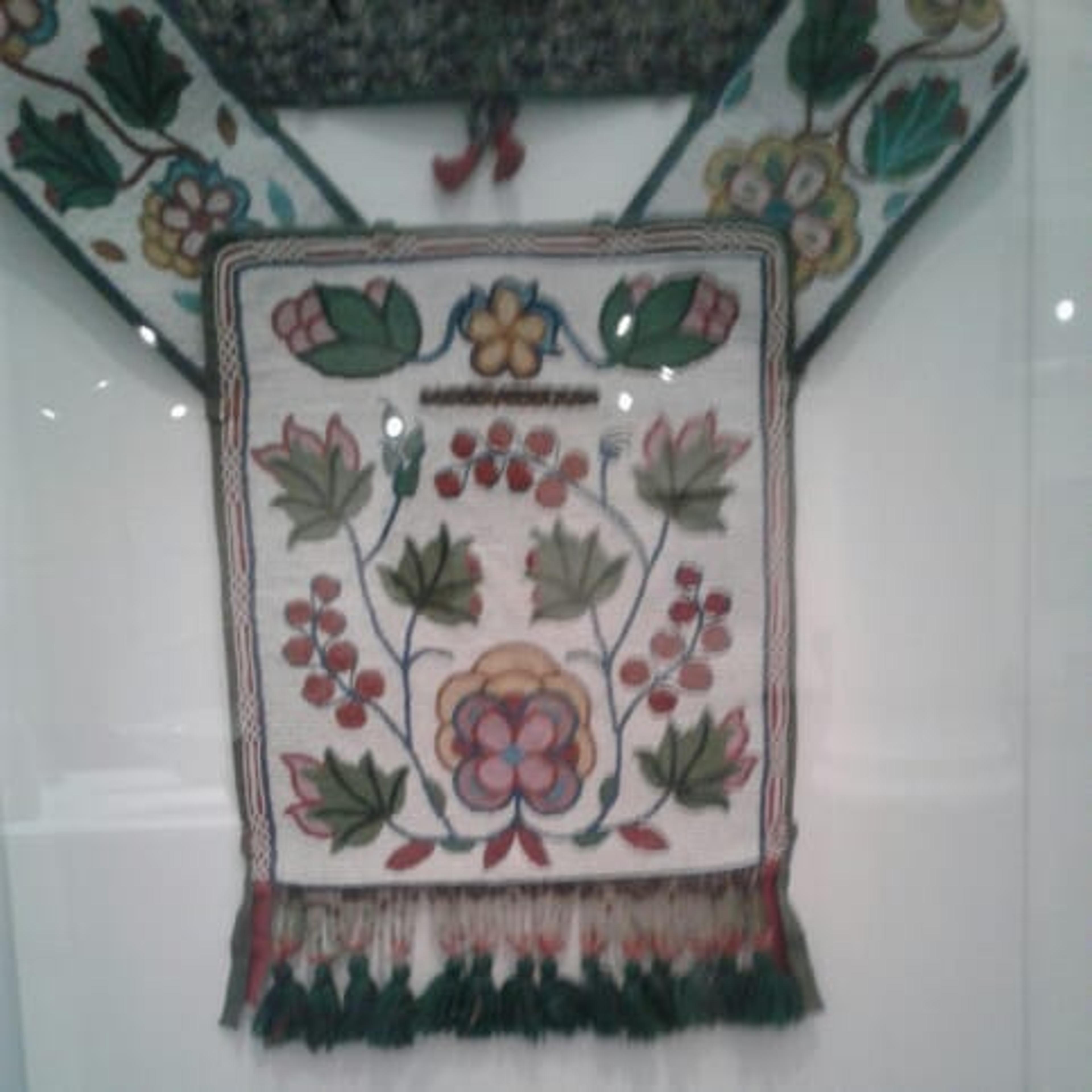 Notice that the small squares of beading at the bottom. These were done on a loom and attached as "fringe" with the yarn tassels. The rest of the beading was sewn to a cloth backing.Bandolier bags were worn across the body. They were popular with Woodlands/Great Lakes tribes in the 19th century. The shape of such bags is based upon 18th century ammunition cartridge bags carried by European soldiers!
Información en español por favor.
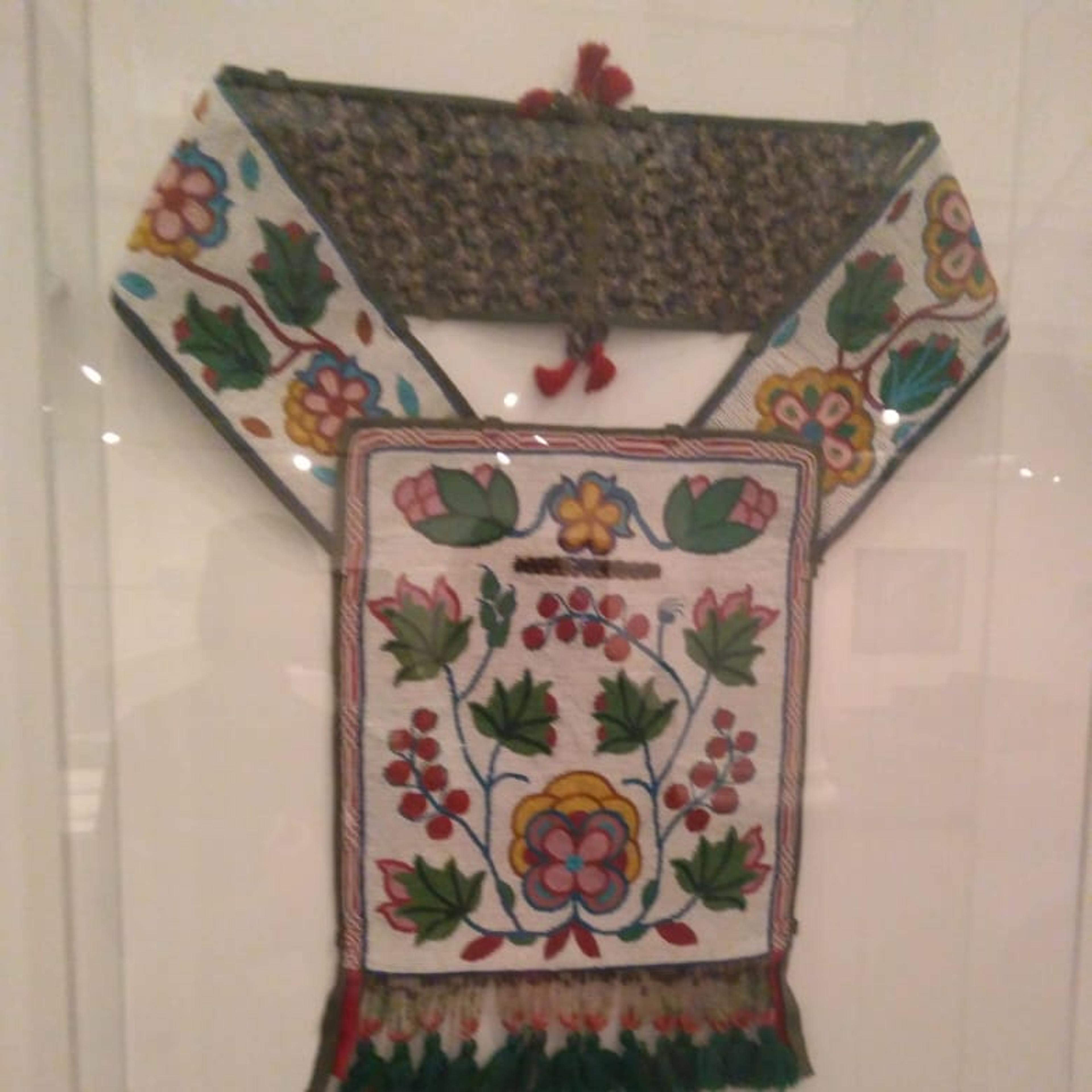 Esta se conoce como una bolsa de bandolera.La forma de la bolsa está basada en las bolsas para munición del siglo XVIII, los cuales fueron llevados por soldados europeos.Aunque utilizaron formas europeas y materiales de base de lana o algodón, los artistas nativos americanos utilizaron las superficies de tales bolsas como lienzos para diseños con significados indígenas.
Can you tell me about the glass beads on the Bandolier Bag?
The beads were trade beads, a valued commodity on the Great Plains in the 19th century. Bandolier bags with beads were produced from the latter half of the 19th century. Techniques of beadwork include loom-beading, which involves the use of a wooden loom and spot-stitching.Would men wear these every day or for an occasion?
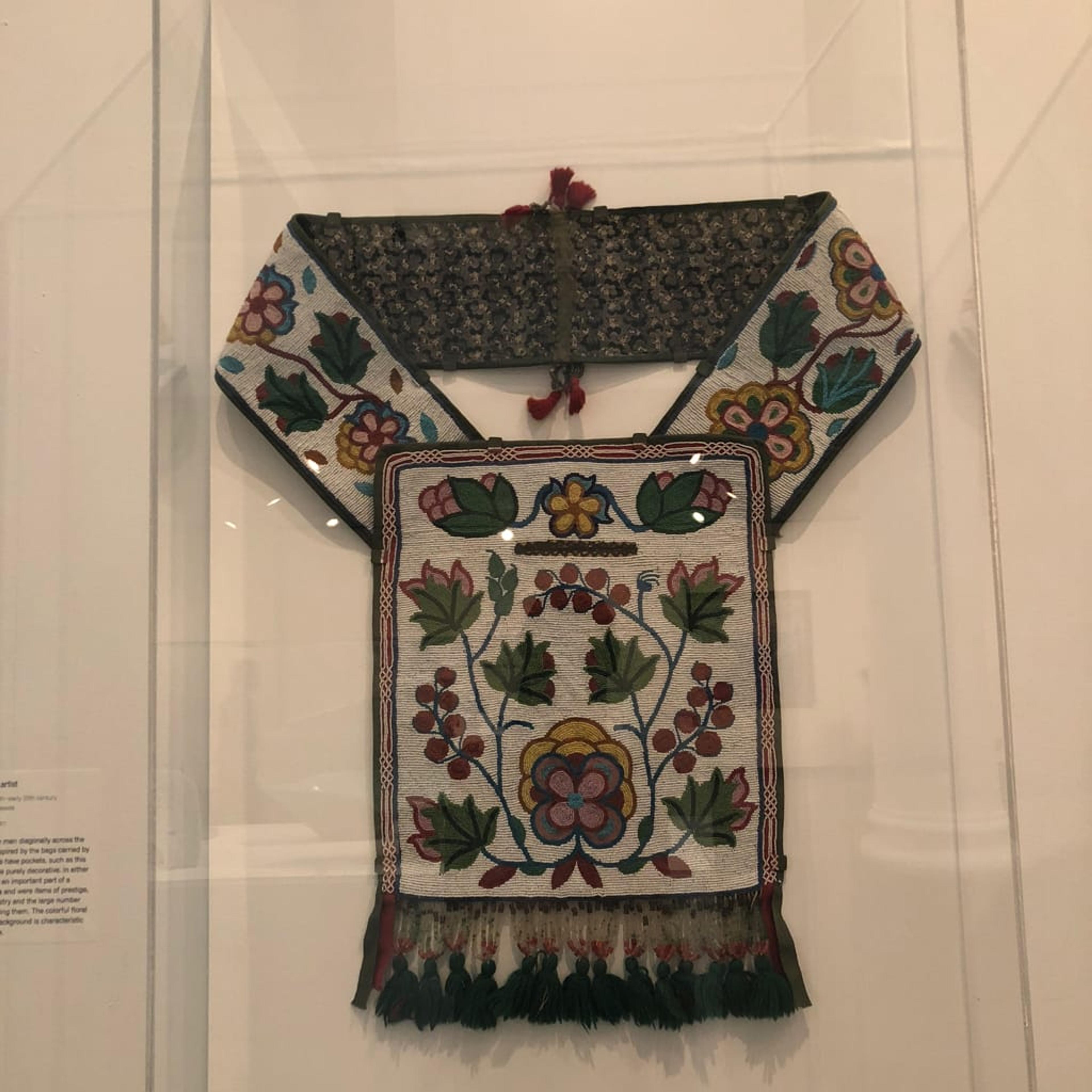 This Bandolier Bag was, in the past, a part of every-day wear for Anishinaabe (Ojibwa), Gawababiganikak or Naskapi men created and beaded by women. Today they are worn with ceremonial regalia, and sometimes worn by women.
Have information?
Have information about an artwork? Contact us at