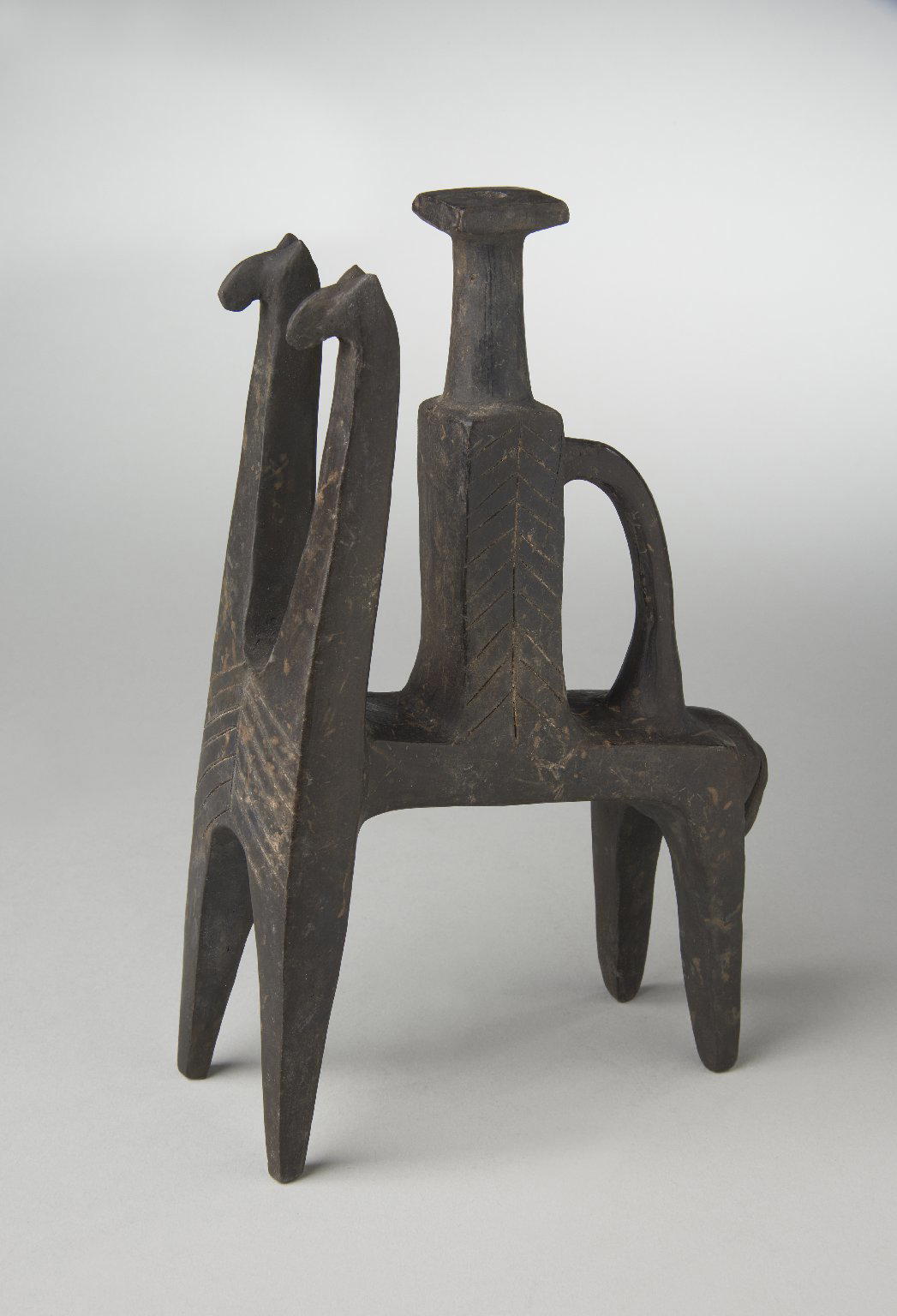
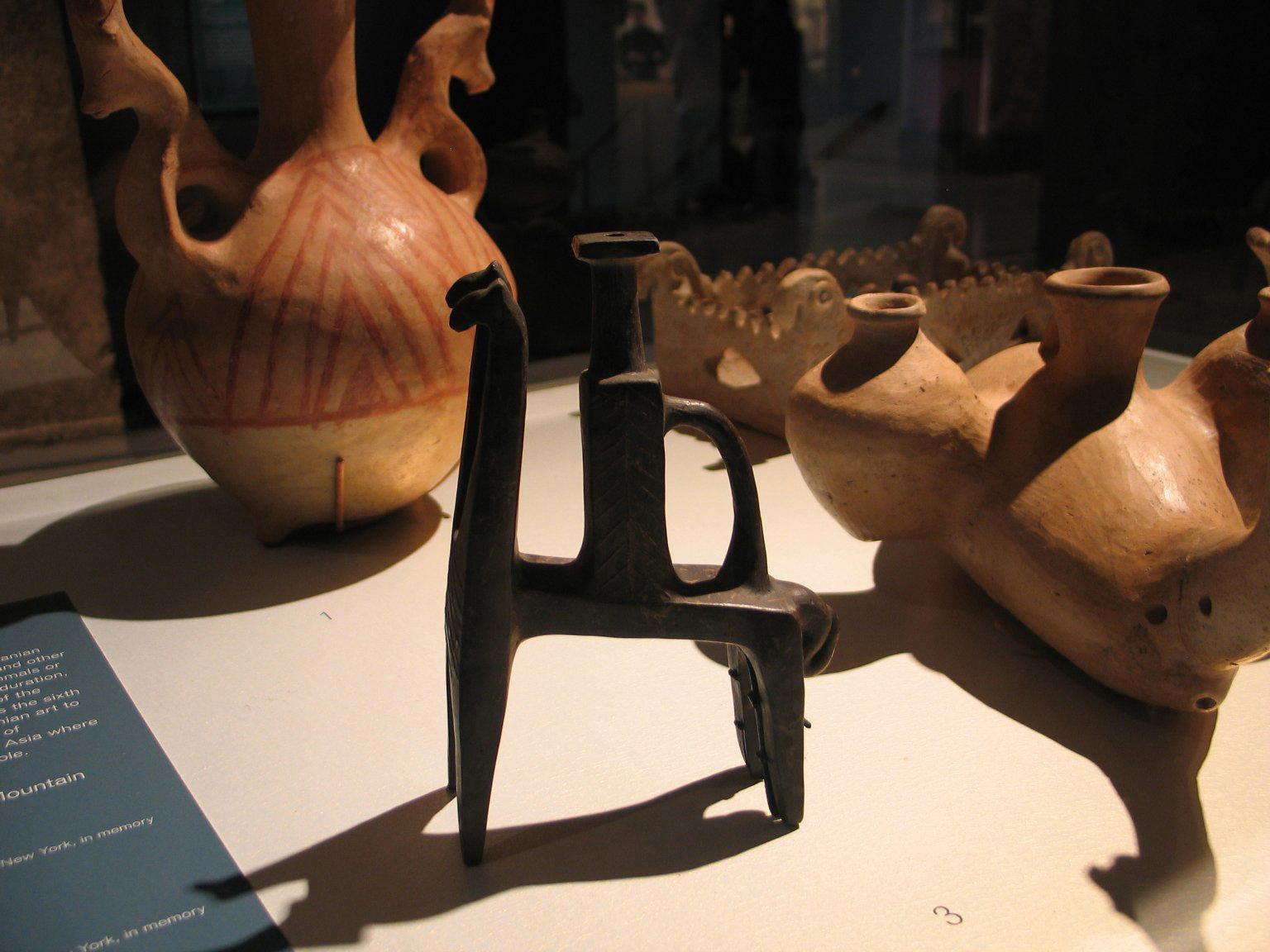
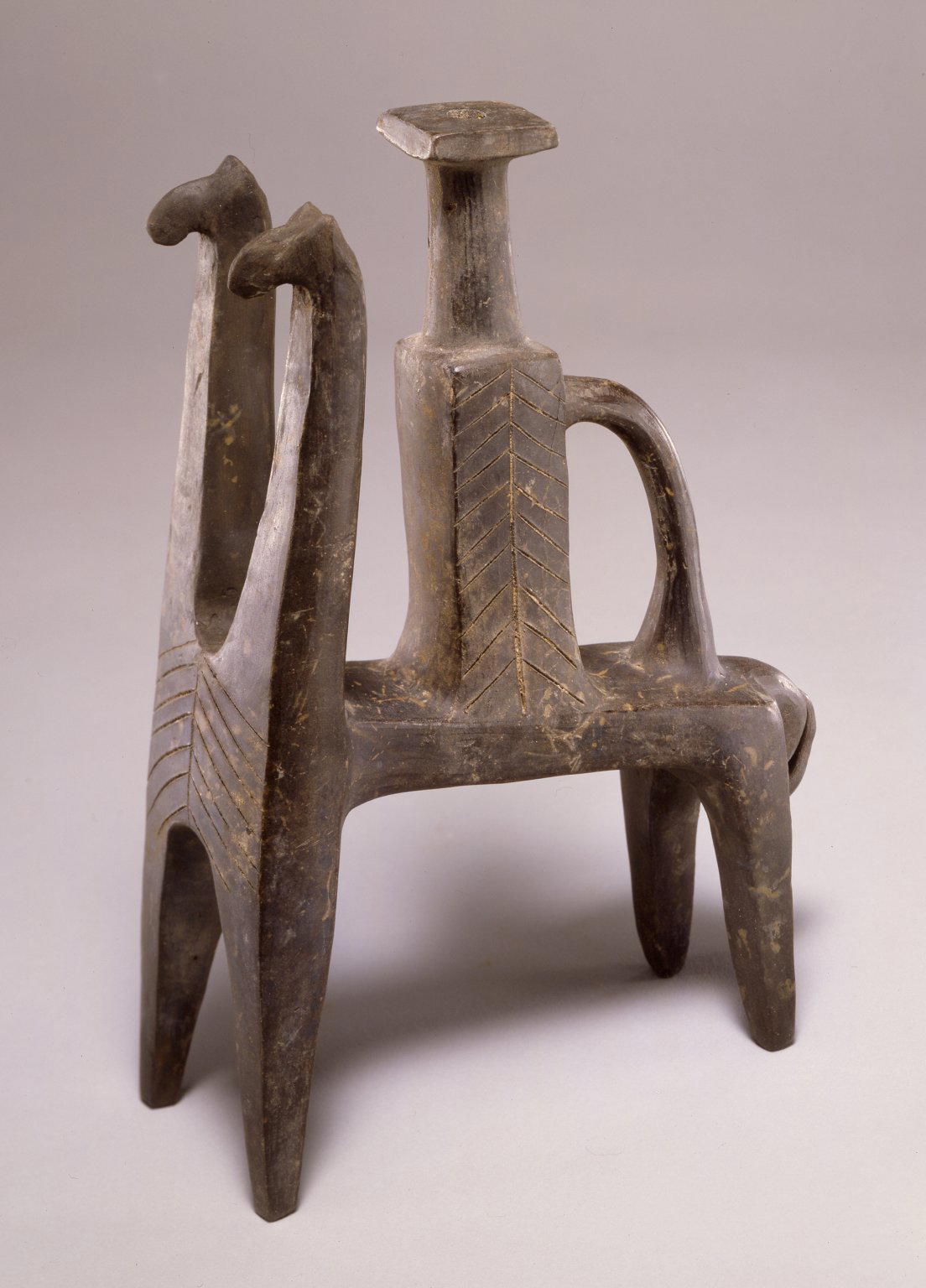
Rectangular Bottle on a Two-Headed Horse
ca. 800–600 B.C.E.
1 of 3
Object Label
Ancient Iranian Ceramics
These ceramics demonstrate ancient Iranian artists’ interest in creating containers and other ritual instruments in the shape of mammals or birds. This tradition was of incredible duration, stretching back to about 3000 B.C.E. of the Neolithic period and lasting as late as the sixth century C.E. These shapes relate Iranian art to the customs of neighboring regions of Mesopotamia, Greece, and Central Asia where animal art also played an integral role.
These ceramics demonstrate ancient Iranian artists’ interest in creating containers and other ritual instruments in the shape of mammals or birds. This tradition was of incredible duration, stretching back to about 3000 B.C.E. of the Neolithic period and lasting as late as the sixth century C.E. These shapes relate Iranian art to the customs of neighboring regions of Mesopotamia, Greece, and Central Asia where animal art also played an integral role.
Caption
Rectangular Bottle on a Two-Headed Horse, ca. 800–600 B.C.E.. Clay, height: 7 1/2 in. (19 cm) length: 5 1/8 in. (13 cm). Brooklyn Museum, Gift of the Arthur M. Sackler Foundation, NYC, in memory of James F. Romano, 2015.65.30. (Photo: Brooklyn Museum)
Gallery
Not on view
Gallery
Not on view
Title
Rectangular Bottle on a Two-Headed Horse
Date
ca. 800–600 B.C.E.
Period
Urartian Period
Geography
Place made: Northern Iran, Iran
Medium
Clay
Classification
Dimensions
height: 7 1/2 in. (19 cm) length: 5 1/8 in. (13 cm)
Credit Line
Gift of the Arthur M. Sackler Foundation, NYC, in memory of James F. Romano
Accession Number
2015.65.30
Frequent Art Questions
I’d like to learn more about these please.
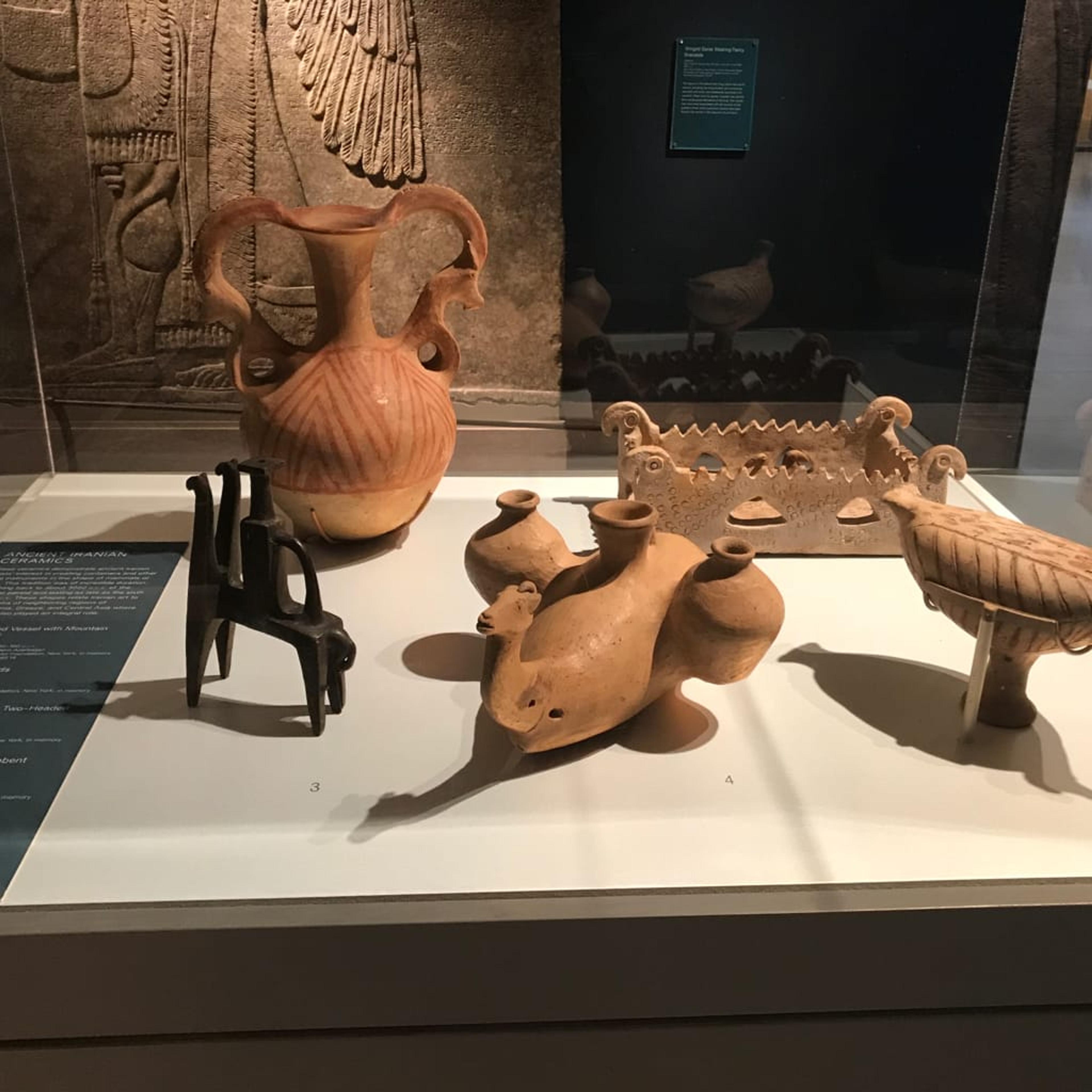 These vessels represent a few different cultures and time periods of ancient Iran. They're all made using different techniques. Elaborate vessels like these would have served ceremonial functions.The one that I find most fascinating is the double-headed horse vase to the left. It comes from Northern Iran or Azerbaijan from a culture known as Urartu. Horses were important in Urartu because that was their main means of transportation and because the Urartians made their money by controlling trade routes.
Tell me more.
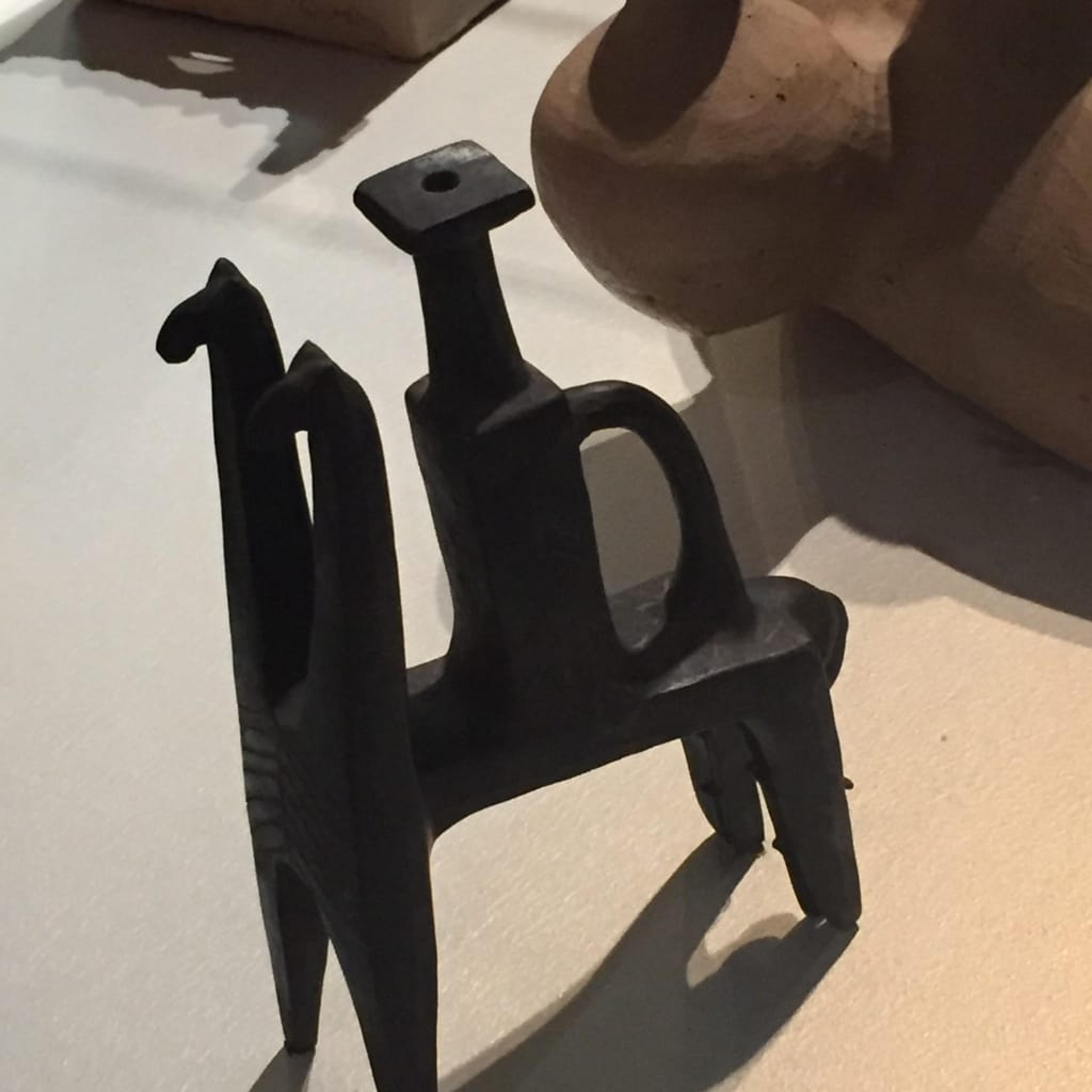 Angular vessels like this were popular with the people of Urartu who lived in what is now northern Iran and the Caucasus region. It would have been constructed using slabs of clay rather than coils.A vessel this small was likely used for cosmetics of perfumes.Thank you!!! Really appreciate the opportunity to ask questions!
Have information?
Have information about an artwork? Contact us at