Tassel (Samjak Norigae)


1 of 3
Object Label
Caption
Tassel (Samjak Norigae), 20th century. Enameled silver pendants with silk cords, Overall length: 13 3/8 in. (34 cm) Scarecrow length: 4 3/4 in. (12 cm) Gourd bottle length: 2 3/8 in. (6 cm) Sword length: 4 in. (10.2 cm). Brooklyn Museum, Gift of Jacqueline Miller Dunnington, 78.248.
Gallery
Not on view
Collection
Gallery
Not on view
Collection
Title
Tassel (Samjak Norigae)
Date
20th century
Geography
Place made: Korea
Medium
Enameled silver pendants with silk cords
Classification
Dimensions
Overall length: 13 3/8 in. (34 cm) Scarecrow length: 4 3/4 in. (12 cm) Gourd bottle length: 2 3/8 in. (6 cm) Sword length: 4 in. (10.2 cm)
Credit Line
Gift of Jacqueline Miller Dunnington
Accession Number
78.248
Frequent Art Questions
What is this supposed to be ?
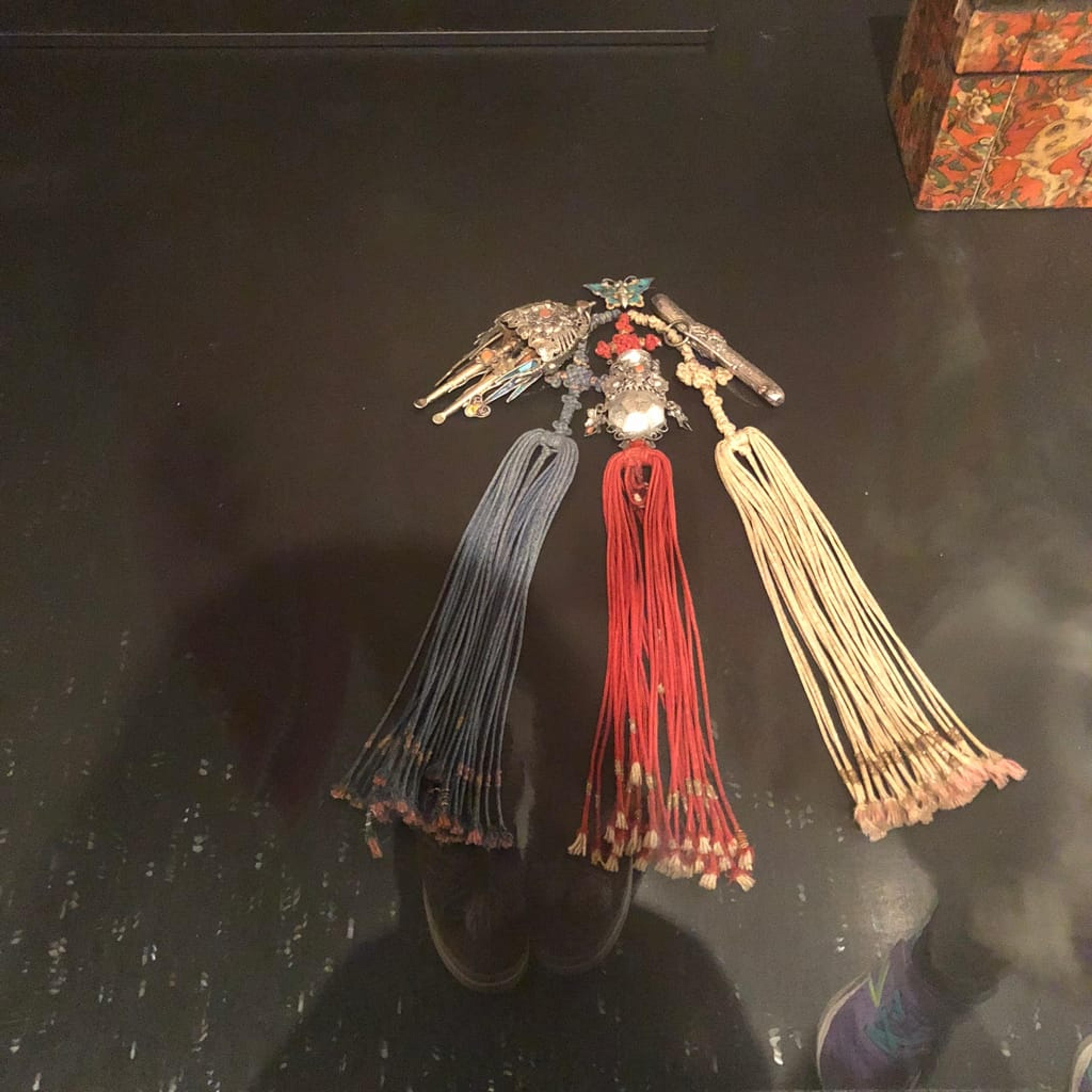 Those are tassels also called Samjak Norigae, which would have been hung from the tie of a jacket or shirt.Cool.I agree! Many of them had symbols and served as charms!
Have information?
Have information about an artwork? Contact us at