Still Life with Three Castles Tobacco

Brooklyn Museum photograph
Object Label
As the still-life genre became increasingly popular with collectors in the late nineteenth century, artists turned toward what was considered a more masculine subject matter, featuring the trophies of hunting or, as in this composition, pipes, jugs, books, and newspapers. William Michael Harnett’s works were favored by New York businessmen, who enjoyed them for their clever illusionistic style (seen in the way the newspaper juts forward) and their references to masculine pastimes.
Caption
William Michael Harnett (American, 1848–1892). Still Life with Three Castles Tobacco, 1880. Oil on canvas, 10 3/4 x 15 in. (27.3 x 38.1 cm) frame: 17 x 21 x 2 3/4 in. (43.2 x 53.3 x 7 cm). Brooklyn Museum, Dick S. Ramsay Fund, 41.221. (Photo: Brooklyn Museum)
Gallery
Not on view
Collection
Gallery
Not on view
Collection
Artist
Title
Still Life with Three Castles Tobacco
Date
1880
Geography
Place made: United States
Medium
Oil on canvas
Classification
Dimensions
10 3/4 x 15 in. (27.3 x 38.1 cm) frame: 17 x 21 x 2 3/4 in. (43.2 x 53.3 x 7 cm)
Signatures
Signed lower left (initials in monogram): "W M HARNETT / 1880"
Credit Line
Dick S. Ramsay Fund
Accession Number
41.221
Frequent Art Questions
Tell me more.
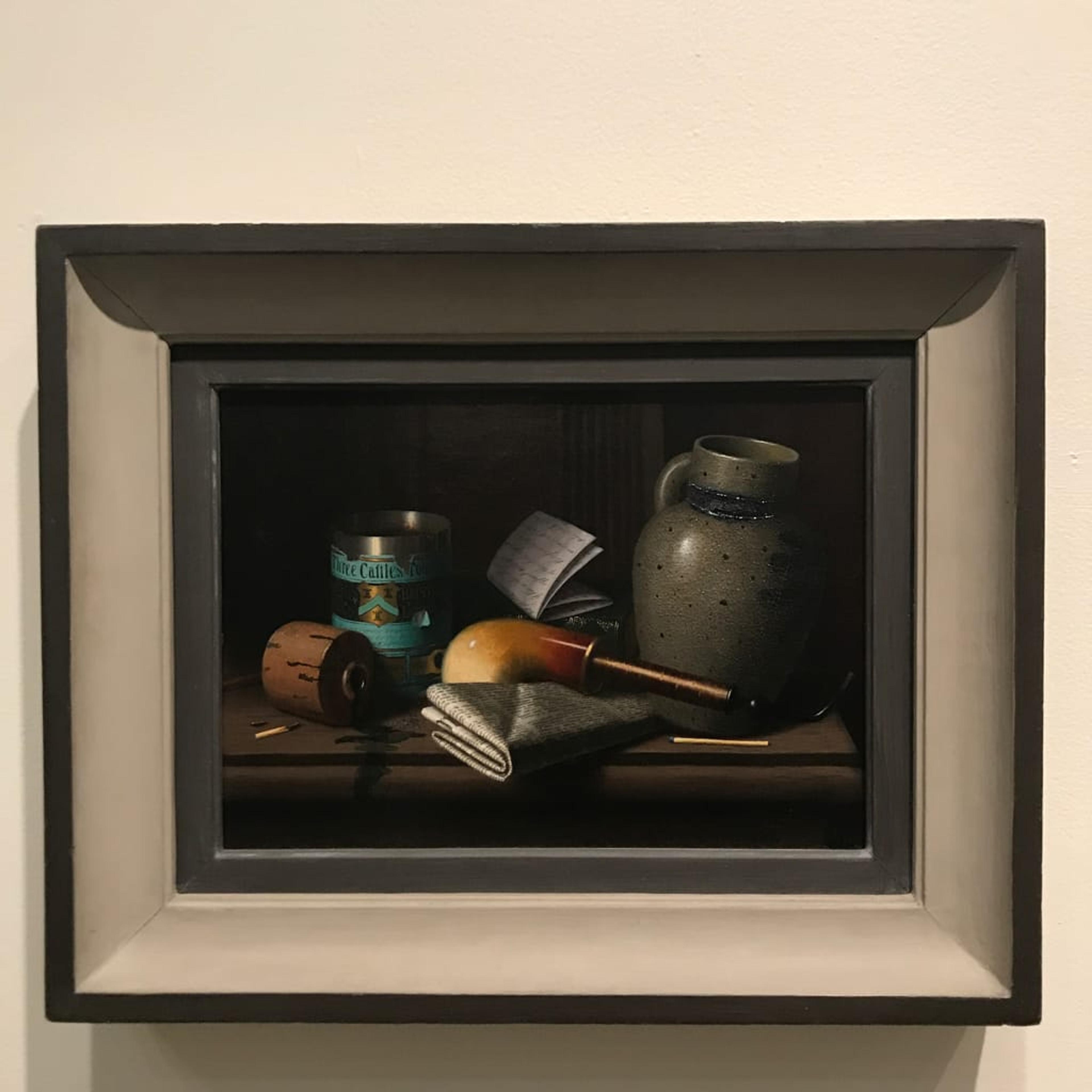 William Michael Harnett was an established professional painter in New York who was known for still life paintings of fruit, household objects, and musical instruments.Harnett's paintings were particularly popular with successful businessmen who wanted art to decorate their homes. This arrangement of objects, including a pipe, tobacco, and newspaper, would have been associated with a male owner in the 19th century.
The texture of the strokes adds a particular 'realness' to the painting, is that characteristic of the artist's work?
Yes! Harnett looked to 17th century Dutch and Spanish still life painting for inspiration where you can find similar techniques. His highly realistic style, known as trompe l'oeil, meaning "fool the eye", was part of what made his work so popular.Thanks for the info!
Have information?
Have information about an artwork? Contact us at